"I have never seen my kids so captivated by a Biblical story before. They actually ask for the next chapter."
— Stephen Jackson
A baby in a basket. An army at their backs. And the sea that only God could open.
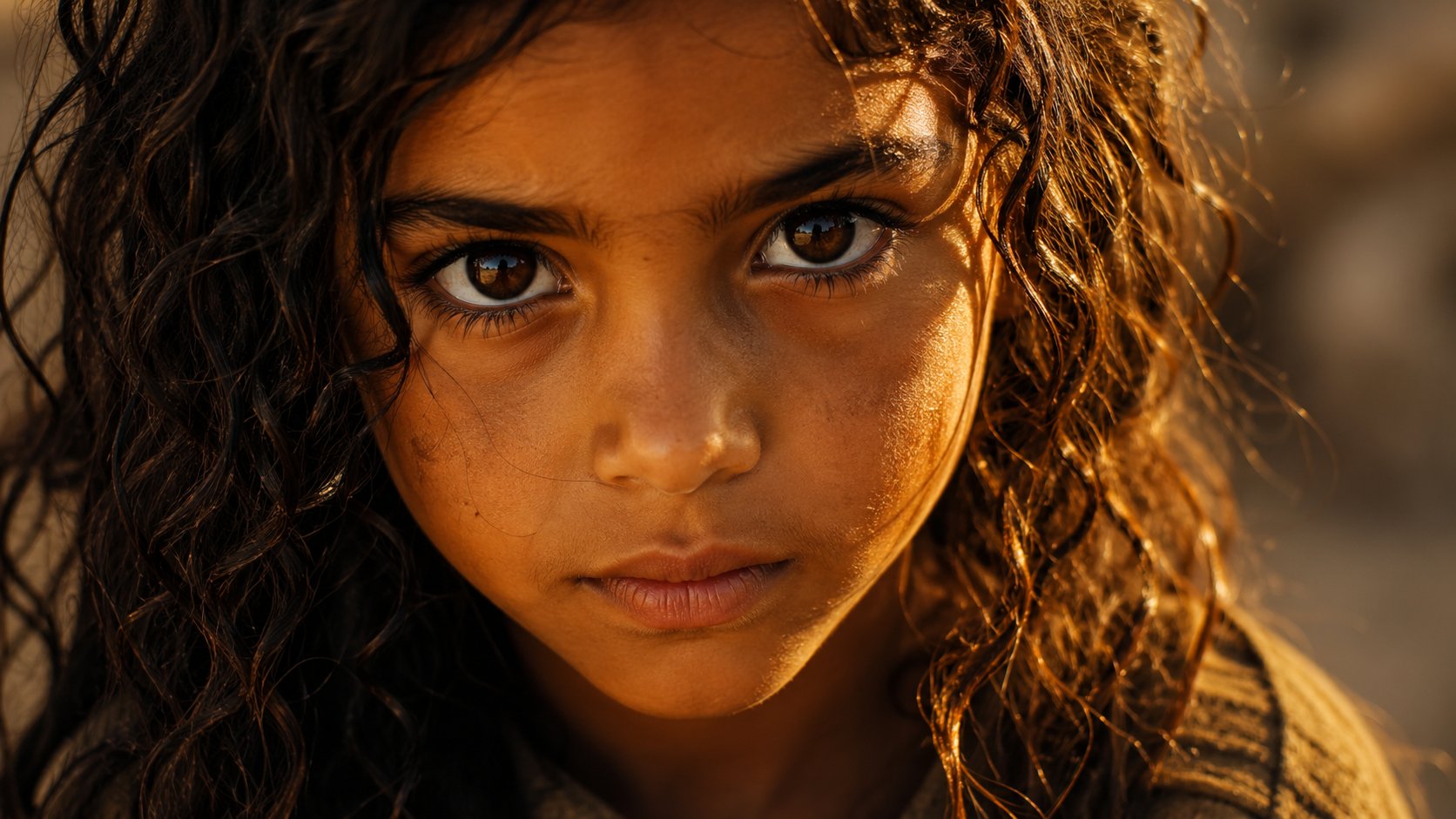
She was eight years old, hiding in the reeds at sunrise, watching her baby brother's basket float toward Pharaoh's daughter on the Egyptian shore. Mud streaked across one cheek. Reeds caught in her hair. Hand pressed over her mouth. The whole future of an entire nation balanced on whether a little girl could keep it together for sixty more seconds.
She kept it together. When Pharaoh's daughter scooped up the basket, Miriam stepped out of the reeds and pulled off the boldest negotiation in scripture, offering to find a Hebrew nurse for the baby. The princess said yes. Miriam ran and got her own mother. The deliverer of Israel was nursed by his own mom in Pharaoh's palace, paid for by Pharaoh's daughter, because his eight-year-old sister thought on her feet.
Decades later, on the far side of the Red Sea after the waters had crashed back over Pharaoh's army, Miriam picked up a tambourine and led the women of Israel in the very first song of freedom ever sung. From watcher to worship leader. The little girl in the reeds had become a prophetess, and the song she sang is still in your Bible, Exodus 15.
Every image is a frame from the cinematic universe, the same look, the same world, every story.


God uses kids on purpose. Miriam was eight. The whole exodus pivoted on what she did in sixty seconds. He sees what is in you right now, not what you'll grow into someday. The bravery that came out of her at eight was already inside her at five. He is putting things inside you for moments you cannot see yet.
You are not too young. The biggest moves in the Bible were almost always pulled off by people the adults had written off. Miriam was eight. David was about thirteen. Mary was fourteen. God picks kids.
Tap a chapter as you read. We'll remember which ones you've finished.
Two million people. One impossible sea.

An Egyptian army at their back.

Soldiers at the door, a baby in a basket.

Pharaoh's fear. A child of prophecy.

An asp in the grass. A mother's stick.

A dove on a branch. A sign.

A Stranger walks the riverbank with her.

Bold faith in the princess's pool.

The God of miracles, in real time.

The water erupts into the sky.

Wonders, gliding through walls of sea.

A new song breaks free from her heart.

Miriam — Completed
Ready for Rahab? →"I have never seen my kids so captivated by a Biblical story before. They actually ask for the next chapter."
— Stephen Jackson"My 12-year-old read this out loud to my 8-year-old. Both loved every second of it."
— T HornerMiriam was the older sister who watched over her baby brother. What's something you've protected for someone you love?
Jochebed trusted the river with her baby. What's something you've had to trust God with?
The Stranger walks beside Miriam in the wilderness. Where do you sense God walking with you?
Miriam grew up watching God do the impossible. What's one impossible thing you've seen?
At the end, Miriam picks up her timbrel and dances. What do you do when God shows up for you?
A scarlet cord in the window. Walls that fell. The Stranger who chose her anyway.
Enter Rahab's World →They came in carts, with horses, with spears that caught the morning sun.
Miriam was nine years old. She heard the carts before she saw them, a low rumble down the dirt road, a sound her body knew was wrong before her brain caught up. Her mother heard it too. Her mother dropped the bowl she was holding. The bowl shattered on the floor, and the sound of it shattering was louder than the wheels.
"Get the baby," her mother said. Not loud. Not panicked. Just clear.
Miriam moved. She had been trained for this without ever being told she was being trained. She crossed the room to the cradle, lifted her brother, three months old, warm, sleeping, and pressed him to her chest.
Outside, the carts kept coming.
— end of chapter one —
The story keeps going.
Read the Whole Book